
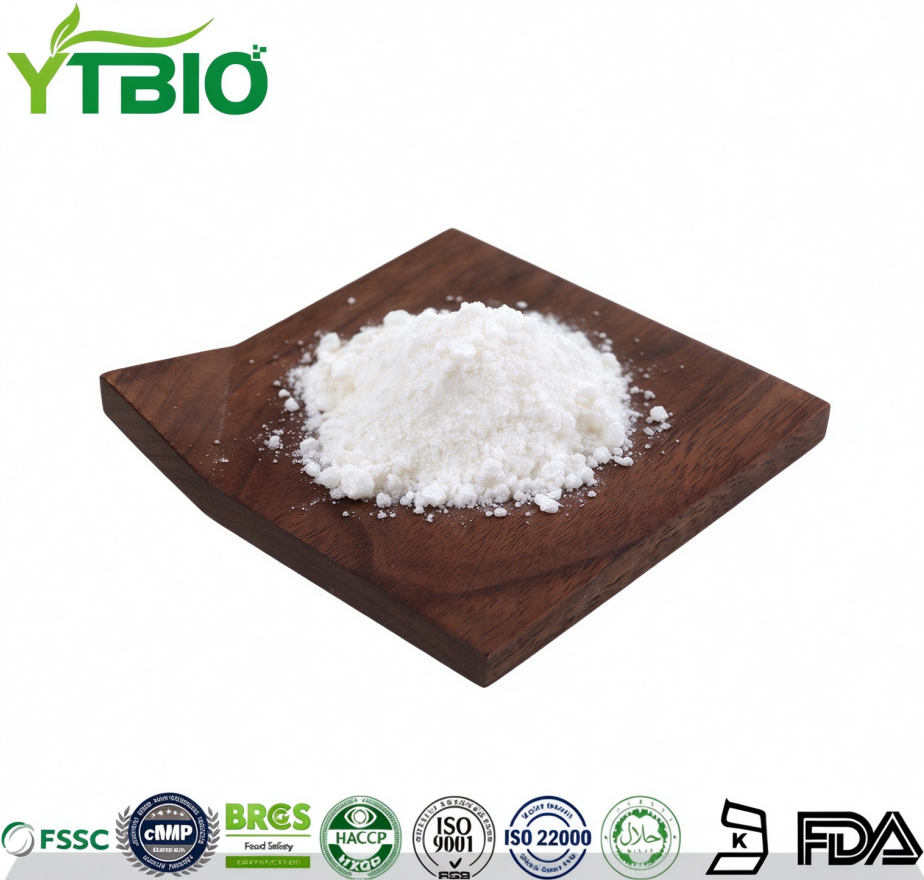
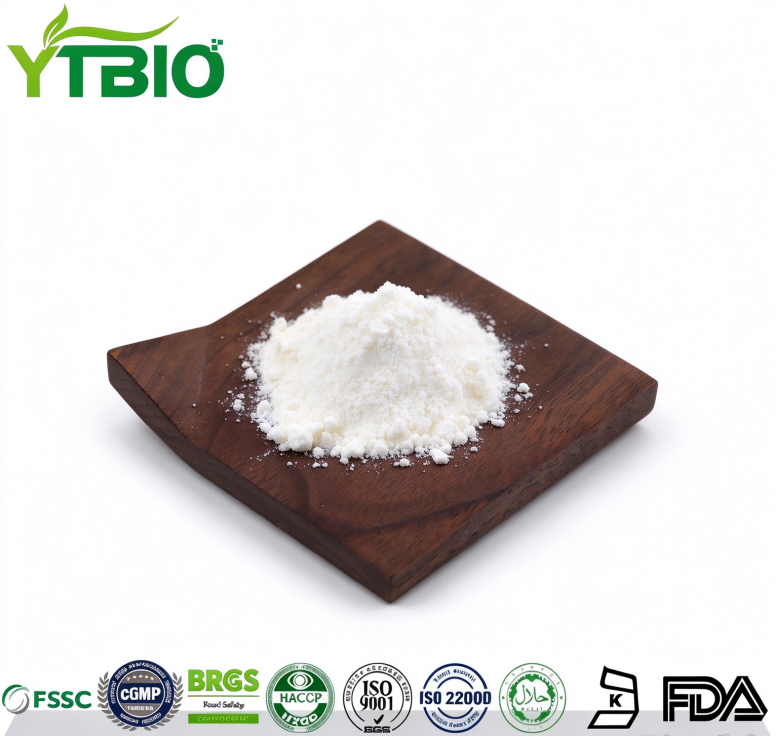
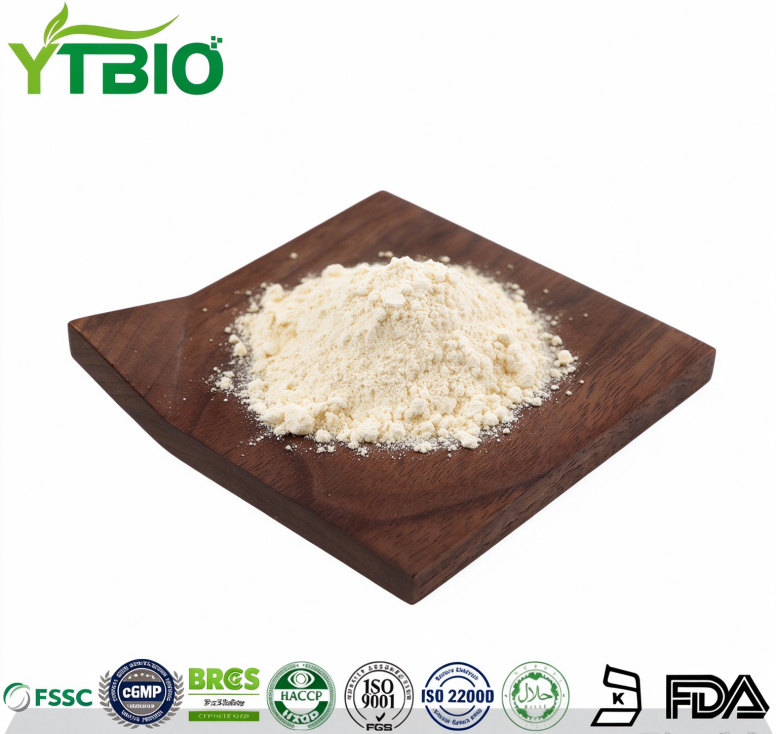
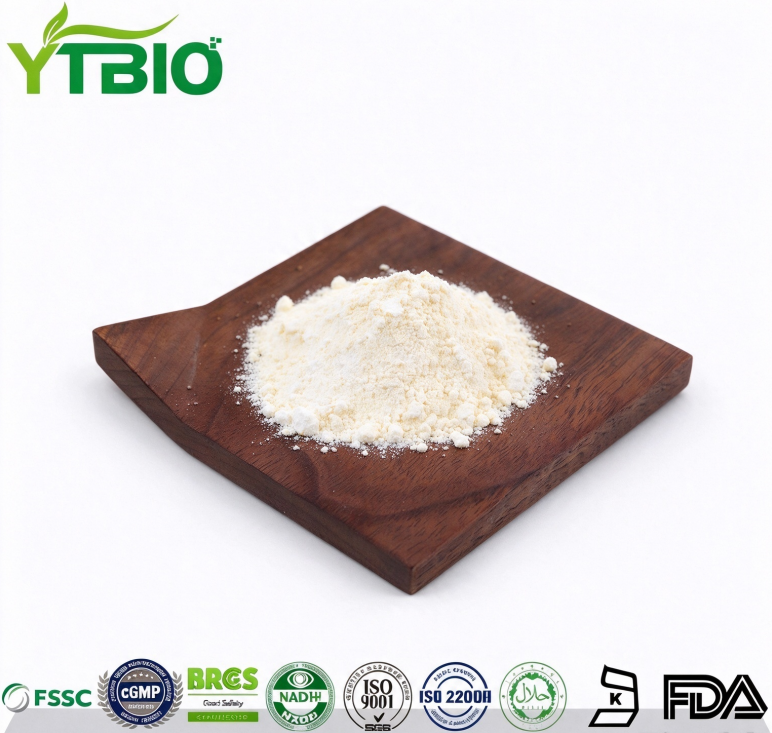
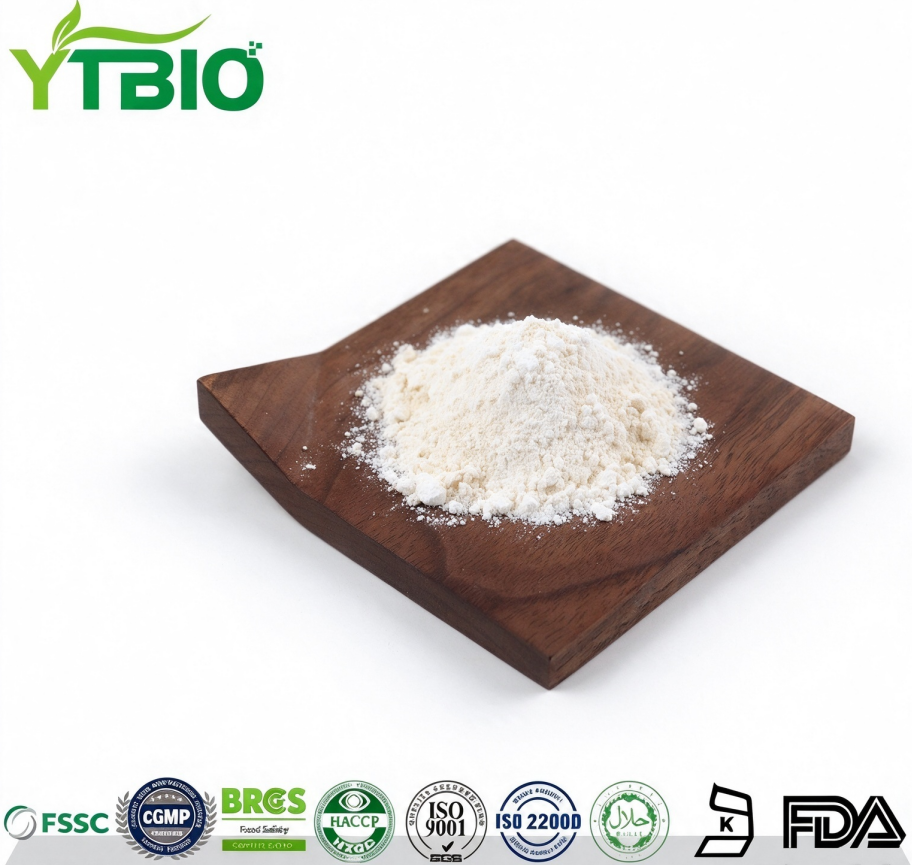
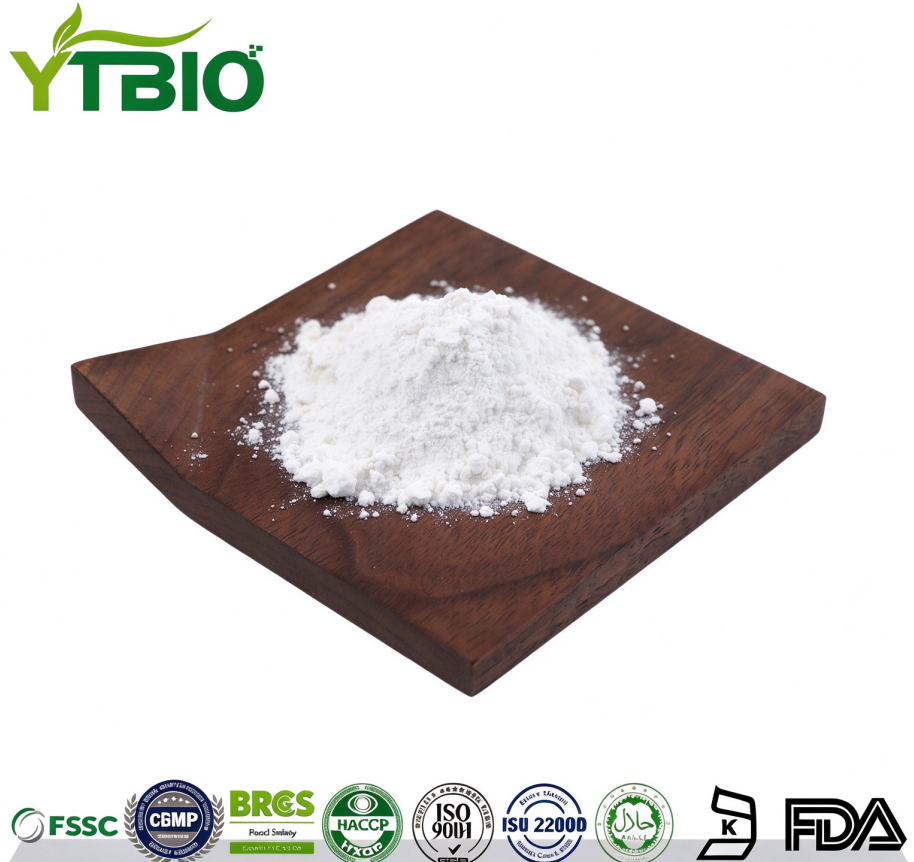
β - Arbutin CAS 497-76-7 Cosmetic Grade 99% Skin Brightening Raw Material YTBIO
YTBIO Beta Arbutin - Cosmetic Raw Material for Daily Skin Brightening
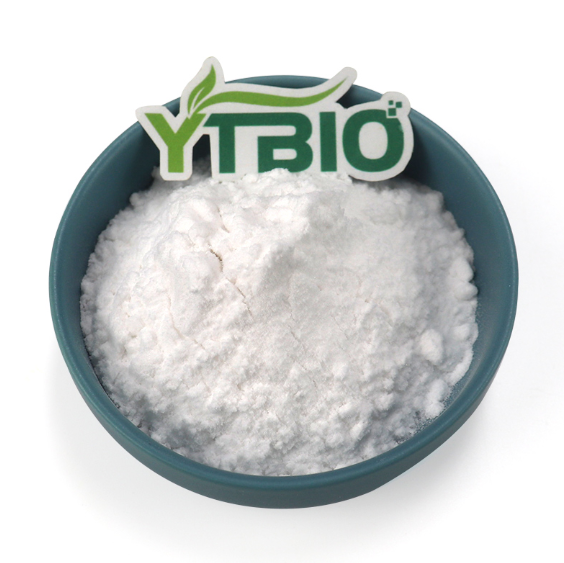
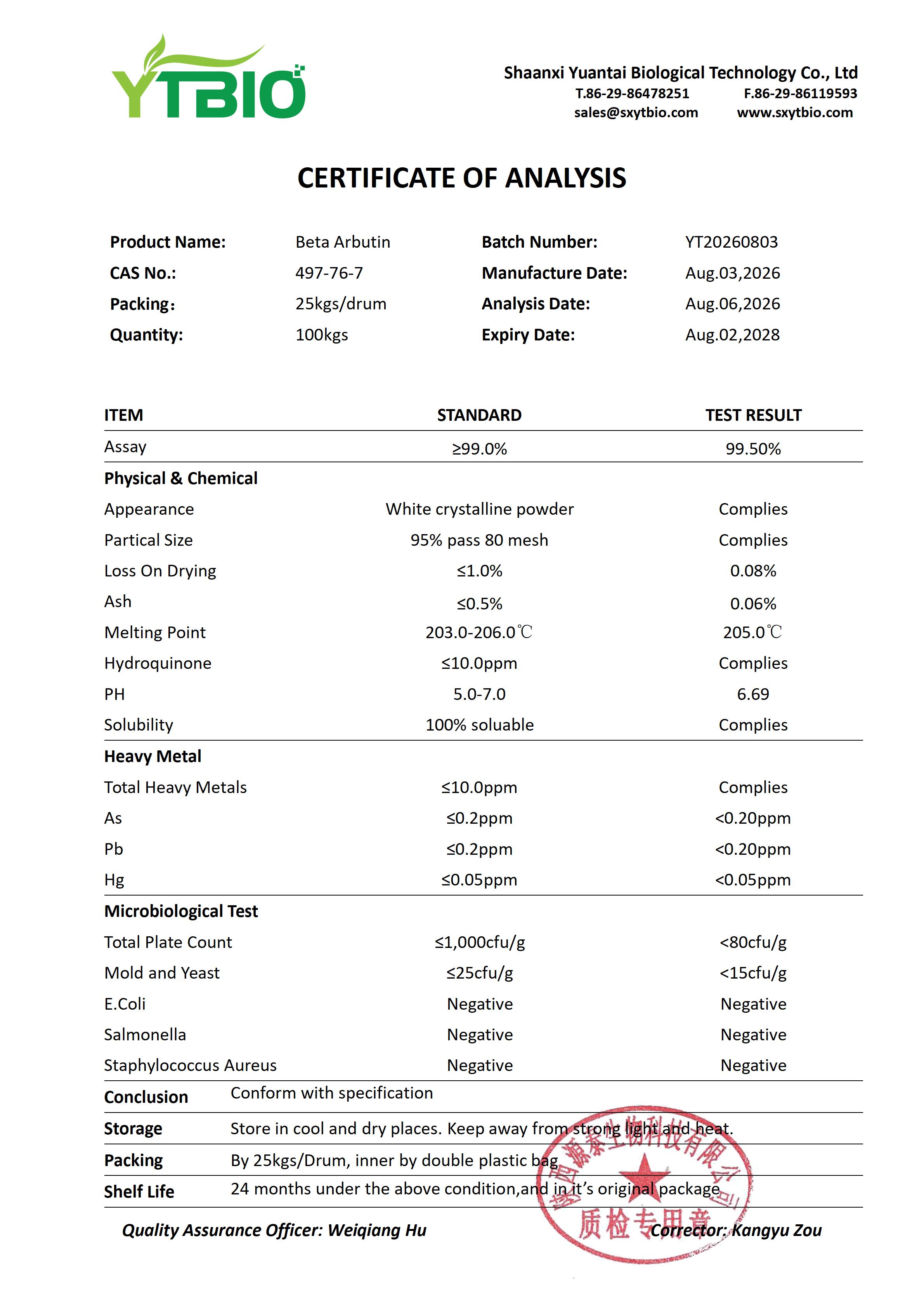
YTBIO, Shaanxi Yuantai Biological Technology Co., Ltd., supplies plant-sourced cosmetic ingredients, nutritional raw materials and personal care actives. Our chain covers extraction, purification, quality testing and bulk shipment. For beta arbutin, each batch is tested in-house, and we provide COA, TDS, MSDS and related documents for customs clearance, formula registration and customer technical review. We support trial orders and bulk production, and can provide practical formulation guidance.
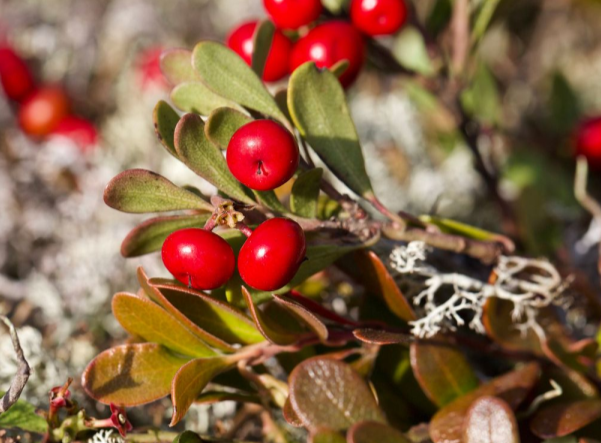
Beta arbutin is a naturally derived brightening substance originally isolated from bearberry leaves and also found in blueberries, cranberries and other plants. It belongs to the arbutin family. Buyers often compare it with alpha arbutin, but the two have different positioning. Alpha arbutin is selected for certain targeted brightening formulas where higher efficacy per unit is desired.
Beta arbutin offers balanced brightening performance at a more favorable cost level. It acts gently and is designed for steady, gradual skin-tone care rather than aggressive, fast whitening. It fits mass-market daily skincare, body care and entry-level functional lines where safety, cost control and long-term consumer tolerance matter. Beta arbutin is water-soluble, easy to incorporate into water-based systems, and suitable for brands developing affordable, low-irritation brightening products.
COA
CORE BENEFITS
CORE BENEFITS
Brighten Uneven Tone
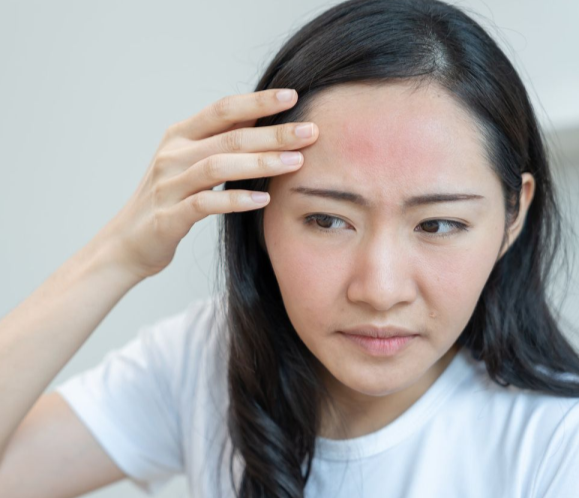
Beta arbutin’s core function is regulating melanin formation. Tyrosinase is the key enzyme that initiates melanin production, and sun exposure, acne inflammation, hormone changes and environmental irritation can activate it, leading to dark spots, sun patches, post-acne marks and dull uneven tone. Beta arbutin slows tyrosinase activity in a mild way and limits excessive pigment production step by step. It does not bleach skin directly. The brightening process takes time, but the result is more natural and gradual. It is suitable for daily formulas intended to reduce the chance of new pigment forming. Performance depends on dose, vehicle, penetration, pH, use duration and sunscreen compliance; formulators should confirm efficacy through stability and human-use testing.
Deliver Antioxidant Protection
Daily skin faces ultraviolet rays, air pollution, smoke and stress, which generate free radicals that damage cell structures, degrade collagen and accelerate dullness, dryness and early aging. Beta arbutin has natural antioxidant capacity and can help capture active free radicals and ease oxidative stress. In a formula, it provides dual positioning: pigment control plus antioxidant protection. It is useful in daytime skincare, but it is not a sunscreen substitute. For antioxidant systems, it can be combined with stable vitamin C derivatives, vitamin E or plant polyphenols, with compatibility and pH checked.
Kind to Sensitive Skin
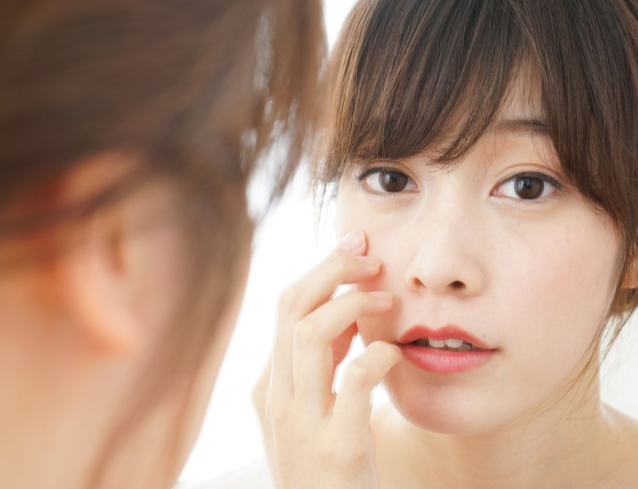
Many brightening raw materials carry irritation risks such as stinging, burning, redness, peeling or tightness, especially for thin, sensitive or barrier-damaged skin. Beta arbutin works through a gentle pathway and does not force fast exfoliation or aggressive cell turnover. Within the recommended dosage range, its irritation probability is low, and most skin types, including dry and fragile barrier skin, can tolerate it well. This expands the user group for brightening products and supports daily, multi-month use rather than short intensive treatment. Formulators should still run patch tests and human safety tests, and avoid combining it with unnecessarily high levels of acids, alcohols or oxidizing actives in the same formula.
Formulation Stability and Handling
Beta arbutin is water-soluble and is normally added to the water phase. For ease of handling, pre-dissolve it into a 5–10% aqueous stock solution and add in the cooling phase. Keep processing temperatures moderate; avoid prolonged heating above 60°C and add late where possible, typically below 45°C, to reduce hydrolysis and color risk. Target pH is generally 4.5–6.5; avoid strongly acidic or strongly alkaline conditions. Use chelating agents such as EDTA where appropriate, control metal ions, and protect from light and oxygen. Avoid direct combination with strong oxidizing agents. For systems containing vitamin C derivatives, select the derivative and pH window carefully. Confirm compatibility with preservatives, thickeners, electrolytes and packaging through accelerated stability testing. Monitor appearance, pH, assay and hydroquinone residue during stability. Beta arbutin is not a preservative and does not replace broad-spectrum preservation.
Product Application
Facial Serum
Brightening facial serum is a classic application. Serums have light texture and good skin contact, allowing actives to contact skin tissue efficiently. Beta arbutin dissolves well in water-based or low-viscosity systems and is easy to keep stable when pH and temperature are controlled. Typical use levels are 0.5–2%, depending on local regulations and stability. It fits clean-beauty concepts and morning or night routines. Entry-level brightening serums often use beta arbutin to balance effect and cost. It can be layered with multiple gentle actives, but each active’s pH and solubility must be checked.
Cream & Lotion
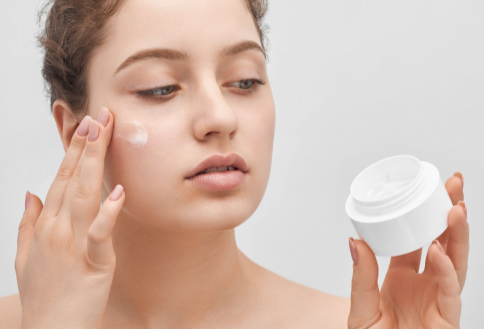
Face cream, daily lotion and body brightening milk are suitable carriers. Emollient and moisturizing components help lock moisture on the skin surface, and a stable moisturizing environment supports continuous use. For face cream and lotion, typical use levels are 0.5–2%; for body lotion, 1–3% is common as a starting point, subject to regulations. Add in the cooling phase and verify emulsion stability. It is cost-effective for hand cream, elbow and knee lotion, whole-body moisturizer and underarm care lotion. It helps fade accumulated body pigment without heavy irritation and suits large-volume production.
Mask Products
Sheet masks, wash-off clay masks and sleeping masks frequently include beta arbutin. The closed environment can promote short-term absorption. Typical use levels are 0.5–2%. Brightening sheet masks are hot-selling items in Southeast Asia, Europe and other markets. Beta arbutin provides steady brightening effects and is less likely to trigger irritation after short contact when used within recommended levels. It is also used in after-sun mask formulas combining brightening and calming functions. Check compatibility with mask essences, preservatives and nonwoven materials.
Gentle Cleansers
Rinse-off cleansers can also use beta arbutin. Brightening facial wash, body wash and mild exfoliating cleanser can add 0.1–0.5% as a starting point. Because contact time is short, the brightening effect is relatively mild, but it adds functional value to basic cleaning products. It helps upgrade simple cleansers into functional beauty items and supports multi-effect daily cleaning claims. Confirm surfactant compatibility, pH and foaming performance.
Other Skincare Lines
Beta arbutin can be added to eye cream, makeup primer, after-sun repair gel and men’s skincare. In after-sun gel, it helps restrain new melanin production while the gel base soothes hot, irritated skin. Men’s skincare prefers mild, low-odor brightening products without complicated steps. Beta arbutin fits this demand. For children’s products and pregnancy-related formulas, use only under strict dosage control and after confirming local regulatory requirements and safety assessment.
Popular Ingredient Combinations & Market Trend
Formulators use blended brightening ingredients for better results:
1. Beta arbutin + Niacinamide: Classic gentle pair, inhibits melanin and repairs skin barrier.
2. Beta arbutin + Stable VC derivatives: Stronger brightening, requires pH adjustment.
3. Beta arbutin + Licorice extract: Fades inflamed dark spots and calms redness.
4. Beta arbutin + Alpha arbutin: Balances cost and brightening effect for premium formulas.
It also matches tranexamic acid, ceramides, HA, panthenol for barrier-friendly brightening.
Market trend: Buyers prefer mild, safe brightening ingredients. Beta arbutin has stable demand for daily skincare and body care. Stricter hydroquinone residue rules favor reliable suppliers. The industry focuses on barrier-safe brightening. Beta arbutin is a cost-effective staple brightening raw material.
Contact Us
Need more info about YTBIO Beta Arbutin or other cosmetic raw materials? Feel free to contact us online or by email anytime. We provide fast replies, stable quality and professional support.
Telephone/WhatsApp:+8617782577059
Email:sales@sxytbio.com