
Is fibroin natural or synthetic?
What Is Fibroin?
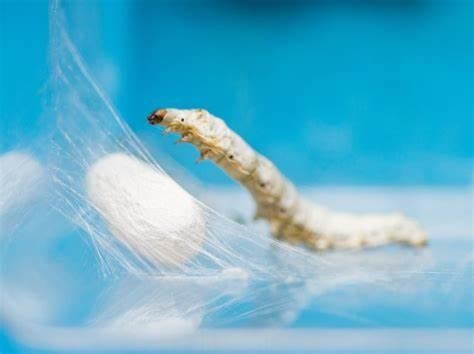
Fibroin is a natural high molecular weight fibrous protein extracted from silk, which is divided into the inner layer of silk fibroin and the outer layer of sericin. Silk fibroin contains nutrients for the skin such as serine, aspartic acid, lysine and glutamic acid. It is a complex composed of heavy chains, light chains and glycoproteins. It is a natural block copolymer (block copolymer: a special polymer prepared by connecting two or more polymer segments with different properties), containing repeating sequence fragments composed of hydrophobic amino acids and fragments composed of hydrophilic large side chain amino acids.
What Are The Characteristics Of Fibroin?
Fibroin has many characteristics, including good mechanical properties and physical and chemical properties, biodegradability, cell compatibility, biosafety, and excellent moisturizing and antioxidant properties.
Fibroin is a natural high-molecular fiber protein extracted from silk, containing 18 kinds of amino acids, of which glycine, alanine and serine account for more than 80% of the total composition. It has good flexibility and tensile strength, breathability and moisture permeability, sustained release and other mechanical properties and physical and chemical properties. These characteristics of silk protein make it widely used in many fields. For example, in the field of skin care products, fibroin can inhibit melanin production, promote collagen synthesis, activate cells, improve cell immunity, promote the metabolism rate of the skin, help repair damaged skin tissue, restore skin vitality, and achieve whitening and moisturizing effects.
In addition, fibroin is also biodegradable, cell compatible and biosafe. Through a specific extraction process, fibroin can be made into medical regenerated silk fibers that can be effectively biodegraded. These fibers can support cell adhesion and growth without obvious cytotoxicity. These biological characteristics of silk protein make it have potential application value in the medical field, such as as a medical regeneration material.
Fibroin also exhibits excellent moisturizing and antioxidant properties. It has good moisture absorption and release properties, can inhibit the production of melanin from the source, effectively absorb ultraviolet rays, and keep the skin white and tender. The amino acids in silk protein can effectively absorb ultraviolet rays, inhibit the activity of tyrosinase in the skin, thereby inhibiting the production of melanin and improving dull skin color from the inside out. At the same time, fibroin can also resist the erosion of the skin by sunlight, microwaves, acid and alkali and other chemical substances, and atmospheric pollutants, and has good antioxidant properties.
What Are The Functions Of Fibroin?
1.Moisturizing and nourishing
Fibroin has the ability to moisturize, improve the water retention effect of the skin, and increase the moisture content of the skin. Its molecular structure has good hydrophilicity and lipophilicity, and can absorb water and oil, thereby maintaining the balance of moisture and oil in the skin and increasing the elasticity and luster of the skin.
2.Antibacterial and anti-inflammatory
Its ingredients contain some natural antibacterial and antioxidant substances, such as silk mycin, deoxyribonucleic acid, glutathione, etc., which can interact with pathogens, inhibit their growth and reproduction, and reduce the occurrence of inflammatory reactions.
3.Repair skin
Fibroin can promote the synthesis of collagen in the skin, enhance skin elasticity and firmness, and it is rich in natural antioxidants, which can reduce the oxidative stress of the skin, delay skin aging, and help improve skin quality and keep skin healthy.
In addition, silk protein also has the effect of regulating the acid-base balance of the skin.
What Is The Application Of Fibroin?
Fibroin has a wide range of applications in many fields, including skin care, medicine and health, high-tech materials, and the food industry.
Skin care and beauty: Fibroin is widely used in beauty products due to its good moisturizing, nourishing, and antioxidant properties. Fibroin mask is one of the representatives. Its hydrolyzate has strong penetration and can penetrate deep into the skin to provide moisturizing, nourishing, and anti-aging effects. In addition, fibroin is also used to make skin care products, such as silk protein oil, which has many functions such as deep whitening, long-lasting moisturizing, nourishing conditioning, anti-aging and anti-oxidation.
Medicine and health: Fibroin is also widely used in the medical field. Due to its good biocompatibility and degradability, fibroin is used to make materials for tissue engineering and drug delivery systems. For example, fibroin membranes and hydrogels can be used in wound dressings to accelerate wound healing and reduce scar formation. In addition, fibroin microspheres can be used as drug carriers to control drug release and improve the efficacy and safety of drugs.
High-tech materials: As a natural polymer protein, fibroin has great application prospects in physics, electronics, optics, biology, engineering and other disciplines. It can be transformed into high-end medical devices such as artificial dura mater and orthopedic bone nails, and participate in the preparation of biosensors, electronic components, etc., showing great application potential in the future smart society, health care, environmental protection and other fields.
Food industry: Fibroin is not only widely used in unstructured and non-food fields, but also involved in the food industry. Although the specific application is not as significant as other fields, the natural source and nutritional value of silk protein allow it to be used as an additive or ingredient in some foods, increasing the nutritional value and market appeal of the product.